Waltermelon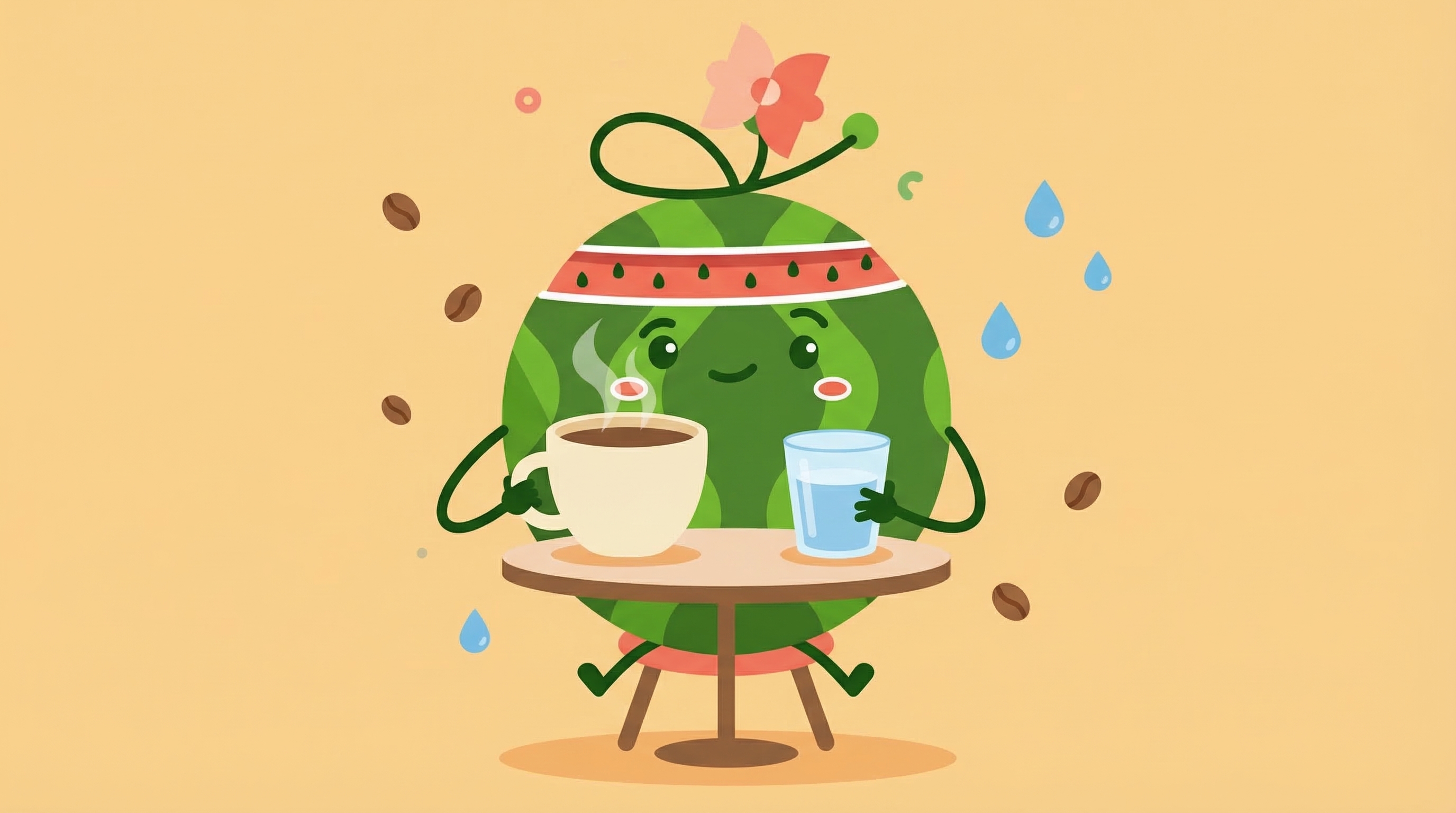
Good news, coffee lovers: does coffee count as water intake? Yes. Mostly yes. Your morning cup is not secretly draining the hydration out of you. That old advice from your aunt who swore every cup of coffee needed to be "cancelled out" with two glasses of water? Science disagrees.
Let's dig into why, how much it actually counts, and what other drinks do (or don't) pull their weight in keeping you hydrated.
Key Takeaways
- Coffee counts toward your daily water intake: studies show it hydrates nearly as well as water
- The "coffee dehydrates you" myth has been debunked by multiple studies
- The Beverage Hydration Index (BHI) shows most common drinks hydrate similarly to water
- Moderate caffeine consumption (3-4 cups/day) does not cause dehydration
- Stronger alcoholic drinks like wine and spirits are what really works against hydration, while regular beer came out close to water
The Myth That Won't Die: Is Coffee Dehydrating?
Caffeine is a mild diuretic. That part is true. It nudges your kidneys to produce a bit more urine. But here's what people get wrong: the water in the coffee more than compensates for the small amount you lose. You're still coming out ahead.
A landmark 2014 study from the University of Birmingham put this to rest pretty definitively. Researchers had 50 men drink either four cups of coffee per day or four cups of water per day for three consecutive days, then swap. They measured blood hydration markers, total body water, and urine output.
The result? No significant difference in hydration between the coffee-drinking days and the water-drinking days. None.
The Mayo Clinic backs this up, stating that caffeinated beverages contribute to your daily fluid needs and that moderate caffeine intake doesn't cause dehydration in regular drinkers. Your body adapts to caffeine over time, blunting the diuretic effect even further.
So no, is coffee dehydrating? Not really. Not in any meaningful way.
How the Beverage Hydration Index Works
Not all drinks hydrate equally, though. This is where the concept of a Beverage Hydration Index (BHI) gets interesting.
It works like a score where plain water is the baseline at 1.0. Anything above 1.0 means your body retains more fluid than it would from water; anything below means less. Most common drinks cluster right around 1.0, closer to water than you'd expect.
A 2016 study in The American Journal of Clinical Nutrition developed a "Beverage Hydration Index" (BHI) comparing 13 common drinks to water. The big surprise? Coffee, tea, cola, orange juice, sparkling water, sports drinks, and even lager all hydrated just as well as plain water. The only drinks that performed better than water were milk (both full-fat and skimmed) and oral rehydration solutions, thanks to protein and electrolytes that slow fluid loss.
The takeaway: your morning coffee isn't working against you. It's contributing to your daily hydration almost as effectively as a glass of water. The drinks that really make you lose fluid are stronger alcoholic ones, like wine and spirits.
What Counts Towards Water Intake (And What Doesn't)
So do other drinks count as water? Most of them, yes. Here's a practical breakdown. Want them side by side? Our drink hydration chart puts everyday drinks next to water.
Drinks That Count
Coffee and tea. Both count significantly. Even if you drink 3-4 cups daily, you're adding meaningfully to your hydration. Black, green, herbal: all good.
Milk. Surprisingly one of the most hydrating things you can drink. The combination of water, electrolytes, protein, and a little fat makes it absorb slowly and effectively.
Juice and smoothies. High water content plus nutrients. The sugar is a separate conversation, but from a pure hydration standpoint, they work.
Sparkling water. Identical to still water for hydration purposes. The bubbles don't change anything.
Soups and broths. Absolutely count. A bowl of soup is basically a meal and a glass of water combined.
Drinks That Barely Count (or Hurt)
Alcohol. This is the big one. The stronger the drink, the more fluid you lose. In the BHI study a regular lager came out about the same as water, but wine and spirits make your kidneys flush out more fluid. If you've ever woken up parched after a night out, you already know this.
Very high-caffeine drinks. Once you get into the territory of 300+ mg of caffeine in a single drink (some energy drinks, pre-workouts), the diuretic effect becomes more meaningful. Spread your caffeine out and you'll be fine.
Every drink counts, literally ☕
Coffee and tea are built in, each with its own hydration value. With Premium, type any other drink and Waltermelon's AI tracks the real amount.



But How Much Coffee Is Too Much?
Moderate coffee consumption (roughly 3 to 4 cups a day, or about 400mg of caffeine) is considered safe by most health organizations and won't hurt your hydration status.
Past that? The diuretic effects become more noticeable. Six cups of coffee still hydrates you, but less efficiently. You start getting diminishing returns, and the jitteriness, disrupted sleep, and increased heart rate become their own problems.
The real issue isn't usually dehydration. It's that people who drink a lot of coffee sometimes replace water with coffee entirely. They're not dehydrated because of the caffeine. They're just not drinking enough total fluid.
A better approach: drink your coffee, enjoy it, and also keep water in the rotation. They're not enemies. They're teammates.
Tracking Your Actual Hydration (Not Just Your Water)
Here's a problem with most hydration advice: it only talks about water. "Drink 8 glasses of water a day." But what about the two coffees, the tea after lunch, and the glass of orange juice at breakfast? Those all count toward your hydration too.
This is exactly why we built Waltermelon to track effective hydration, not just water glasses. Coffee and tea are built in and free, each with its own hydration value, and your caffeine adds up automatically. Want something more specific? Type "oat milk latte" and the AI works out its hydration, caffeine and sugar, so it counts differently from a black espresso.
With 20 built-in drinks and AI for anything else, you get an honest picture of how much water you should actually be drinking based on what you're already consuming. That afternoon cappuccino? It shows up as real hydration, because it is.
And if you're someone who relies heavily on coffee and tea, the caffeine tracking feature lets you keep an eye on your total daily caffeine alongside your hydration, so you can see when you're getting plenty of fluid but maybe overdoing the stimulants.
Shopping around for a tracker? Not every app treats coffee the same way. Here's how water tracker apps that count coffee for free stack up.
Signs You Might Need More Fluid (Coffee or Otherwise)
Even if your coffee habit is contributing to your hydration, pay attention to your body. Some signs you're not drinking enough water include:
- Dark yellow urine. The simplest and most reliable indicator. Aim for pale straw color.
- Afternoon headaches. Often dehydration, often blamed on stress.
- Dry mouth and lips. Obvious but easy to ignore when you're busy.
- Fatigue after lunch. Sometimes it's the meal. Sometimes you just need a glass of water. Or a coffee. Both work.
- Feeling thirsty. By the time you're thirsty, you're already a bit behind on hydration.
If you're drinking 2-3 coffees plus some water each day and these symptoms sound familiar, the fix probably isn't less coffee. It's more total fluid. Add a glass of water between coffees. Set a reminder. Small adjustments make a big difference.
The Bottom Line
Does coffee count as water intake? Yes. It genuinely, scientifically, measurably does. The Beverage Hydration Index shows coffee performs nearly identically to water, a far cry from the "coffee dehydrates you" myth that has haunted health advice for decades.
Drink your coffee. Enjoy it. And also drink some water. The best hydration strategy isn't about avoiding certain drinks. It's about understanding what each one actually does for your body and making sure the total adds up.
If you want to see exactly how your mix of daily beverages translates into real hydration, Waltermelon makes it effortless. Log what you drink, and Walter (our friendly watermelon mascot) will show you the full picture. No guesswork, no guilt about your espresso habit.
FAQ
Does tea count as water intake?
Yes! Tea (black, green, white, or herbal) counts toward your daily hydration. The BHI study found that both hot and iced tea hydrate just as well as water. Drink up without worry.
Does beer count as water intake?
It depends on strength. The BHI study found that a regular lager hydrated roughly the same as water. But stronger beers, wine, and spirits are a different story: higher alcohol content increases urine output and works against hydration. If you're drinking, alternating with water is always smart.
How much coffee is too much for hydration?
Up to 4 cups (about 400mg caffeine) per day is fine for hydration. Beyond that, the diuretic effect becomes more significant and the hydration return per cup drops. The bigger risks at high intake are sleep disruption and anxiety, not dehydration.
Can I replace all my water with coffee?
Technically you'd still be hydrated, but it's not a great idea. You'd likely overshoot on caffeine long before hitting your hydration needs. A mix of water, coffee, tea, and other beverages gives your body the best balance, and your sleep schedule will thank you.